
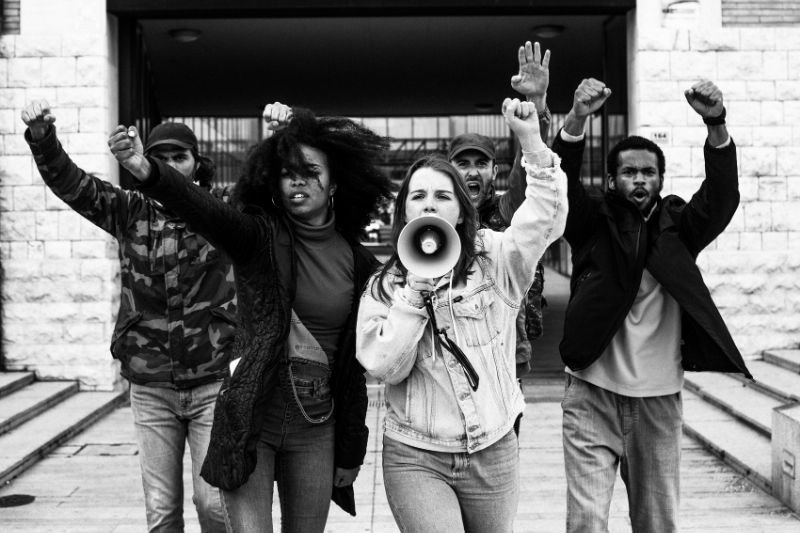
Social work has never been a neutral profession. It has always been shaped by the social, political, and economic forces of its time. Radical social work emerged as a challenge to systems that create and maintain inequality. It called for action beyond individual casework, demanding structural change. Born from political activism, it confronted oppression head-on. Its advocates saw injustice not as isolated events but as patterns rooted in power. This approach redefined the role of the social worker. It placed advocacy, resistance, and empowerment at the center of practice. The history of radical social work is a story of constant struggle and vision.
The History of Radical Social Work
#1. 1960s: Emergence Of Radical Social Work
The 1960s saw a wave of political activism across civil rights, anti-war protests, and labor movements. Social workers began questioning their role in upholding unjust systems. They moved from charity-based approaches to confronting structural causes of poverty and inequality. Radical social work emerged as a political stance against oppressive institutions. It linked personal problems to social injustices, such as racism, classism, and patriarchy. Practitioners organized with communities, challenging discriminatory laws and policies. They rejected neutrality, seeing it as siding with the status quo. The 1960s laid the groundwork for a profession committed to fighting systemic oppression.
#2. 1970: “Radical Social Work” Published
In 1970, the book “Radical Social Work” by Roy Bailey and Mike Brake crystallized the movement’s ideas. It connected Marxist theory with practice, framing social issues as products of capitalist structures. The book provided a clear ideological foundation for challenging inequality. It urged practitioners to recognize the political nature of their work. It called for collective action, not just individual intervention. Many universities incorporated its principles into social work training. This publication shifted the profession’s discourse toward power and oppression. It became a reference point for future movements, proving that academic thought could fuel grassroots activism.
#3. 1980s: Growth Of Anti-Oppressive Practices
The 1980s brought a formalization of anti-oppressive practice (AOP) within social work. This approach sought to dismantle power imbalances between workers and clients. AOP emphasized that all interventions must challenge oppression at every level. Practitioners analyzed how race, gender, class, and disability intersected to create disadvantage. Policies and codes of ethics began incorporating anti-oppressive principles. Training programs highlighted the impact of institutional bias. Social workers engaged in advocacy for policy reform, housing rights, and welfare protections. Despite political pushback during conservative governments, the anti-oppressive framework became central to progressive practice worldwide.
#4. 1990s: Integration Of Feminist And Anti-Racist Perspectives
In the 1990s, feminist and anti-racist social work gained greater influence. Both movements stressed that lived experience should guide practice. This integration redefined radical social work to address multiple forms of oppression simultaneously. Feminist perspectives focused on gender inequality, domestic violence, and reproductive rights. Anti-racist perspectives tackled institutional racism, cultural bias, and immigration issues. Social workers began developing culturally competent approaches while addressing systemic sexism. Intersectionality became a key concept, helping practitioners understand overlapping disadvantages. This period expanded the profession’s capacity to serve diverse communities without reinforcing stereotypes or power imbalances.
#5. 2000s: Focus On Globalization’s Effects
By the 2000s, globalization’s impact on social welfare became impossible to ignore. Economic policies shifted jobs overseas, widened wealth gaps, and reduced social protections. Radical social work adapted to address global forces shaping local inequalities. Practitioners challenged austerity measures, privatization, and corporate exploitation. They engaged in cross-border solidarity, supporting movements in developing countries. Migration and refugee issues became central concerns, as displacement increased. Social workers used international human rights frameworks to advocate for marginalized groups. The profession’s scope expanded beyond national borders, recognizing that structural injustice was both local and global in nature.
#6. 2010s: Revival Amidst Austerity Measures
The 2010s saw severe budget cuts to public services in many countries. Social workers faced rising caseloads and fewer resources. Radical social work re-emerged as a forceful critique of austerity policies. Practitioners linked cuts to deliberate political choices that deepened inequality. Grassroots campaigns, strikes, and protests became common tools of resistance. They collaborated with community organizations to protect housing, healthcare, and welfare rights. Digital activism played a larger role, amplifying voices against injustice. This decade reminded the profession that advocacy is not optional but essential when public services are under attack.
#7. 2020s: Continued Advocacy For Social Justice
The 2020s began with a global pandemic exposing deep social inequalities. Essential workers faced high risks, while marginalized communities suffered the most. Radical social work positioned itself as a frontline advocate for systemic change. Practitioners fought for fair healthcare access, workers’ rights, and social protections. They addressed rising authoritarianism, climate justice, and digital exclusion. Intersectional approaches guided interventions in increasingly complex crises. Collaboration with grassroots movements grew stronger. In this decade, radical social work continues to evolve, proving its enduring relevance in the fight for social and economic justice.
Key Figures and Movements
#1. Michael Burawoy
Michael Burawoy, a sociologist, advanced the concept of “public sociology,” which influenced radical social work. He argued that social work must connect with public debates to challenge injustice. His work stressed that practitioners should engage communities, not just institutions. Burawoy’s ideas encouraged professionals to link academic knowledge with activism. He viewed social problems as products of structural inequality rather than individual failings. His advocacy for participatory approaches resonated with radical social workers. By promoting dialogue between professionals and marginalized groups, Burawoy strengthened the movement’s ability to push for systemic change on a broader scale.
#2. Barbara Fawcett
Barbara Fawcett’s contributions to feminist social work reshaped how practitioners viewed gender and power. She emphasized that gender oppression must be central to all social work analysis. Her research linked feminist theory to practical strategies, influencing policy and frontline practice. Fawcett challenged traditional power dynamics between worker and client. She argued that personal issues like domestic violence or childcare barriers are rooted in societal inequality. By integrating feminist values into anti-oppressive practice, she broadened the scope of radical social work. Her work inspired generations to challenge sexism in both policy and everyday service delivery.
#3. Peter Leonard
Peter Leonard’s writings offered one of the clearest frameworks for radical social work. He connected personal struggles directly to political and economic structures. Leonard critiqued mainstream social work for focusing too narrowly on individual change. He argued for collective action as the only way to achieve lasting social justice. His work blended Marxist theory with practical tools for community organizing. Leonard’s influence extended into teaching, inspiring practitioners to challenge systemic inequality rather than manage its effects. His scholarship remains a cornerstone for those committed to structural change in the profession.
#4. The British Association Of Social Workers (BASW)
The BASW has been a key institutional advocate for progressive practice. It uses its platform to challenge policies that harm vulnerable communities. The association supports members in resisting unethical directives and promotes anti-oppressive principles. BASW has campaigned against austerity measures, discrimination, and erosion of public services. It publishes guidance and position papers that influence government policy. Through training, advocacy, and public engagement, BASW strengthens the profession’s collective voice. Its role demonstrates how organized bodies can push radical agendas within formal systems while maintaining professional credibility.
#5. The Anti-Racist Social Work Movement
The anti-racist social work movement emerged to confront institutional racism in practice and policy. It insists that racial inequality must be actively dismantled in all aspects of social work. The movement promotes culturally competent practice, equitable access to services, and recruitment of diverse professionals. It challenges racial bias in child welfare, housing, policing, and immigration systems. Activists and scholars developed frameworks for identifying and addressing systemic racism in agencies. This movement ensures that anti-oppressive practice includes a strong racial justice component, making it indispensable to radical social work.
#6. The Feminist Social Work Movement
The feminist social work movement centers gender equality as a fundamental goal of the profession. It demands that social work address how sexism shapes life opportunities and service access. The movement advocates for survivors of domestic violence, workplace discrimination, and reproductive rights violations. It pushes for gender-sensitive policies and funding priorities. Feminist social workers integrate intersectionality, recognizing that gender oppression often overlaps with racism, classism, and other biases. This movement has ensured that radical social work maintains a focus on dismantling patriarchal structures alongside other forms of oppression.
Closing Thoughts
Radical social work has never been static. It has grown through decades of activism, scholarship, and direct action. Each era brought new challenges and strategies, yet the core commitment remained the same: confronting injustice at its roots. This history shows that meaningful change requires both individual advocacy and structural reform. Key figures and movements have shaped its path, keeping the focus on equality and human dignity. The work is far from finished. As social issues evolve, radical social work continues to adapt, proving that the fight for justice is an enduring and necessary part of the profession.